Why 'last cookie wins' is not always the right attribution
The last click gets the commission. Sounds fair, but a click at the very last moment can claim a sale that was already done. What the alternatives are, and what Klatsa does with a basket freeze per campaign.
 By Jeroen Jaspers
·
·
3 min read
When a customer clicks through two publishers before buying something, someone has to get the commission. Almost every affiliate network uses the same rule for that: the last click wins. The rule is simple and anyone can check it. But it is not always fair.
How 'last cookie wins' works
Every click on an affiliate link sets a cookie or passes a click ID to the web shop. When a new click comes along, it overwrites the previous one. At the purchase, only the last one counts.
Where it goes wrong
An example:
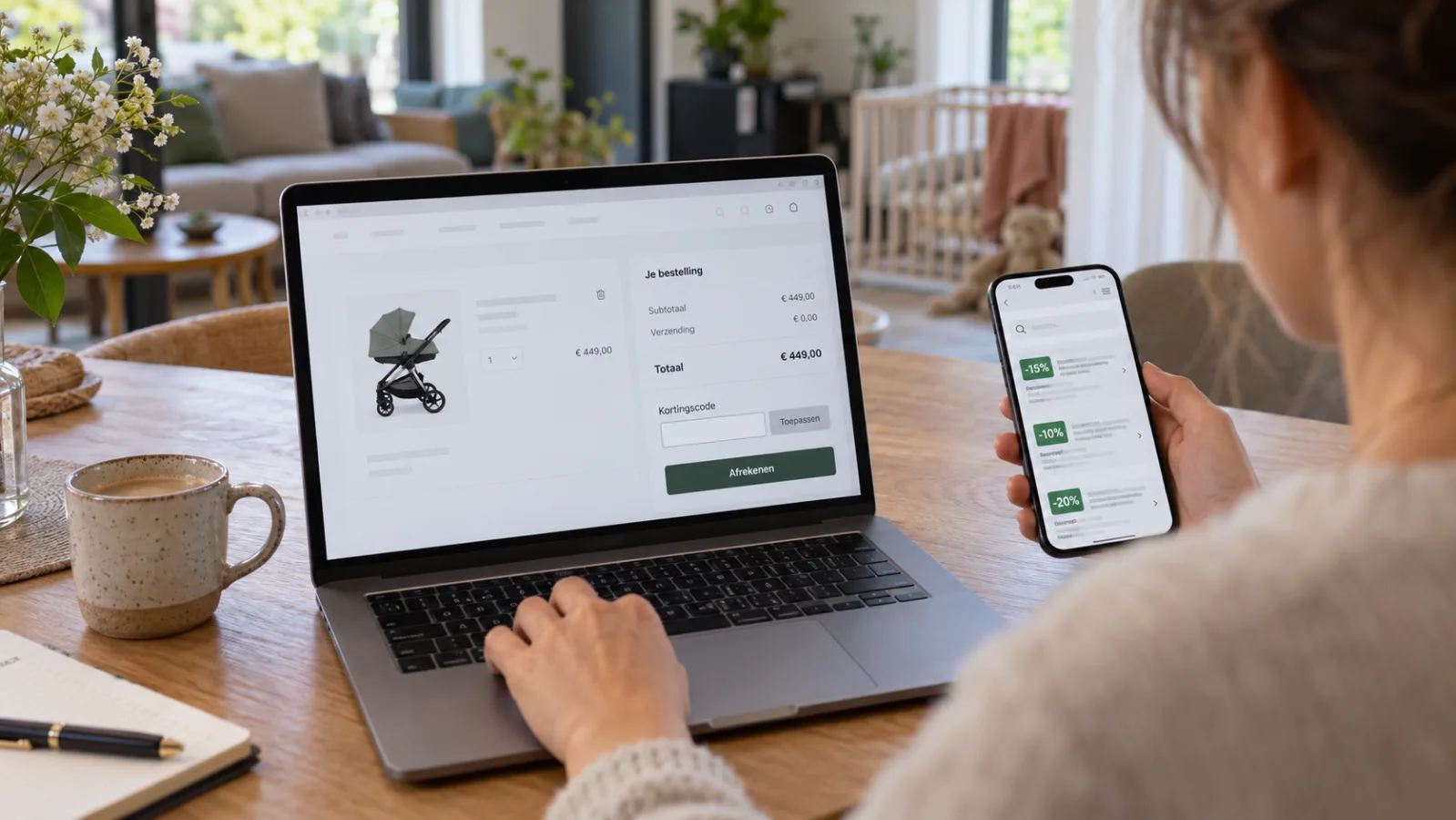
- Someone reads a comparison of prams and clicks through to a web shop.
- The comparison made the choice; the pram is in the basket.
- At checkout the field "Do you have a discount code?" appears.
- The customer looks for a code, clicks back to the same shop through a coupon or cashback site, and pays.
- The last site gets the commission. The comparison site gets nothing.
The advertiser pays commission for a click that brought no extra sale, often with a discount on top. And the publisher who actually brought the customer loses their reason to keep promoting the shop.
To be fair: a comparison or content site can also be the last click, and a cashback site can tip a doubter over the edge. The problem is not who clicks last. The problem is that the last click gets all the credit, even when it no longer caused anything.
The alternatives
- First click. The first referrer gets everything. That rewards discovery, but ignores whoever convinced the customer afterwards.
- Splitting the commission (multi-touch). Every publisher in the customer journey gets a share. Fairer on paper, but hard to explain and to verify, and every split is a choice someone has to make.
- View-through. A banner that was shown without a click counts too. That is rarely justifiable.
- Basket freeze. It is still the last click, but it is locked as soon as the customer starts checking out. A click in those final minutes no longer takes the sale over.
What Klatsa does
At Klatsa the last click counts, within the campaign's cookie period. That is clear and verifiable. On top of that:
- No coupon sites. We do not admit publishers whose model revolves around scraped codes. More on that in Why Klatsa does not allow coupon sites.
- Basket freeze per campaign. The advertiser can set a freeze of 15 minutes to 2 hours per campaign. Once the customer starts checking out, the publisher who sent them keeps the sale for that long. Publishers can see for every campaign whether a freeze applies. It works with the Klatsa integration for WooCommerce, Magento and Lightspeed.
- Insight into attribution. In the Attribution report, advertisers see who had the last click and how often a sale went from one publisher to another. Publishers also see the sales they missed, without the name of the other party.
Finally
No attribution model is perfect. The last click remains the basis, because anyone can check it. With a freeze and insight into who takes over from whom, you remove the biggest unfairness: the click at the very last moment that claims a sale that was already done.
Ready to get started with affiliate marketing?