Tracking broken, nobody notices: how Klatsa detects outages early
A publisher faithfully sends traffic, but the tracking has been broken for three days. Nobody has seen an error message. How Klatsa detects this kind of silent outage before it lasts a week.
 By Jeroen Jaspers
·
·
7 min read
By Jeroen Jaspers
·
·
7 min read

Picture this: a publisher has been faithfully sending traffic to an advertiser for three days. Good visitors, honestly earned. But the advertiser's checkout flow was quietly changed last Monday, and the tracking pixel went with it. No more conversions in the dashboard. No commission for the publisher. No insight for the advertiser.
Nobody has seen an error message. Nobody has called. It simply went wrong.
This kind of silent outage is one of the biggest frustrations in affiliate marketing. Not spectacular, no alarming error message, just day after day of lost revenue and commission that never gets paid. At Klatsa we have built a set of monitoring layers that detects this kind of problem before it lasts a week.
What can go wrong, and why it is so hard to see
Tracking only works properly when a chain of small steps all line up. If one link breaks, the whole measurement stops. The most common causes:
On the advertiser's side:
- A website update without a tracking check. A new payment page, a new checkout platform or a rewritten thank-you page, and the pixel snippet disappears or no longer loads in the right place.
- Redirect chains that lose the parameters. Clicks come in with
?klatsa_click_id=...in the URL, but an intermediate redirect strips the query string. The conversion can no longer be linked to the click. - HTTPS migrations and CSP changes. A stricter Content Security Policy blocks the loading of external scripts, including the tracking pixel.
- A form or checkout on an external domain. The click lands on
shop.nl, but the order is completed onpay.shop.nl: a different domain, a different cookie domain, a lost session.
On the feed side:
- The feed URL changes. The advertiser has moved the product feed to a new location without telling anyone. The publisher's feed import starts failing, but the old products are still in the tool, by now out of date.
- The feed format breaks. An extra column, a changed XML namespace or a broken encoding causes the import to fail partly or entirely.
- The feed is empty or too small. Because of a configuration error the feed suddenly returns 0 or very few products, and publishers unintentionally present an empty or outdated selection.
How Klatsa monitors this
The network advantage: we see the pattern, you do not
This is what makes a network different from a single publisher or advertiser trying to monitor on their own.
An individual publisher seeing fewer conversions does not know what is going on. Has their traffic got worse? Has the advertiser paused the campaign? Or is the tracking broken? They only have their own data, and it does not tell them enough.
Klatsa sees the whole picture. If three different publishers with completely different traffic sources all stop converting at the same advertiser on the same day, the conclusion is unmistakable: the tracking on the advertiser's side is broken. No publisher can see that. We can.
That network perspective is the heart of our monitoring. We do not only look per publisher or per integration, we look at patterns across the whole network. A drop at one publisher is a signal. A drop at several publishers at once, at the same moment, at the same advertiser, is an alarm.
Integration health: traffic without tracking
The technical implementation of that insight is called "traffic without tracking": if publishers send clicks to an advertiser, we expect postback signals back within a reasonable period. As soon as that ratio structurally goes askew (clicks yes, conversions never), the system flags the integration as suspect.
In the admin dashboard we see per integration:
- A traffic-light indicator: green (all normal), amber (signal weak or missing), red (broken or silent)
- A chart of postbacks per day over the past two weeks, so that we can see whether a drop is gradual or sudden
- The date and time of the last successful conversion
Twice a day an automated check runs through all active integrations. Where there are anomalies, an alert goes to our team.
Feed health: every sync logged
Every time Klatsa synchronises a product feed (or a publisher downloads the feed) it is logged: the time, the HTTP status code and the number of products processed.
On the basis of those logs we monitor:
- Sync frequency: if a feed that is normally updated daily suddenly does not come in for three days, that is a signal.
- Product counts: a feed that shrinks from 4,800 to 12 products is probably broken, not deliberately smaller.
- HTTP errors: 404s, 403s or 500s on the feed URL are noticed immediately.
Here too we see a traffic light per feed in the dashboard, with a chart of syncs per day.
What happens when there is a signal
When the system detects an anomaly, we actively find out what is going on. We do not wait until a publisher or advertiser calls.
Step 1: Verification. We check whether the signal is real: has no postback really come in, or is there another explanation (a seasonal dip, a paused campaign)?
Step 2: First check. We test the tracking ourselves: place a test order, check whether the pixel loads, verify that the click ID is passed on correctly.
Step 3: Contact. If something really is broken, we contact the advertiser, not to complain but to fix it together. It is often a small change in the checkout configuration that is sorted out in five minutes.
Step 4: Repayment or correction. If publishers demonstrably sent traffic during a period when the tracking was broken, we look at a correction based on historical conversion rates. That is not always a hundred percent accurate, but it is fairer than "hard luck".
What you can do yourself
Monitoring catches a lot, but no system is infallible. As an advertiser or publisher you can do a few things to spot outages early:
For advertisers:
- Always send a message through the platform when you change the checkout page, the payment platform or the thank-you page. Five minutes of effort can prevent weeks of lost data.
- Use the test order flow in Klatsa to verify after every major website update that the tracking still works.
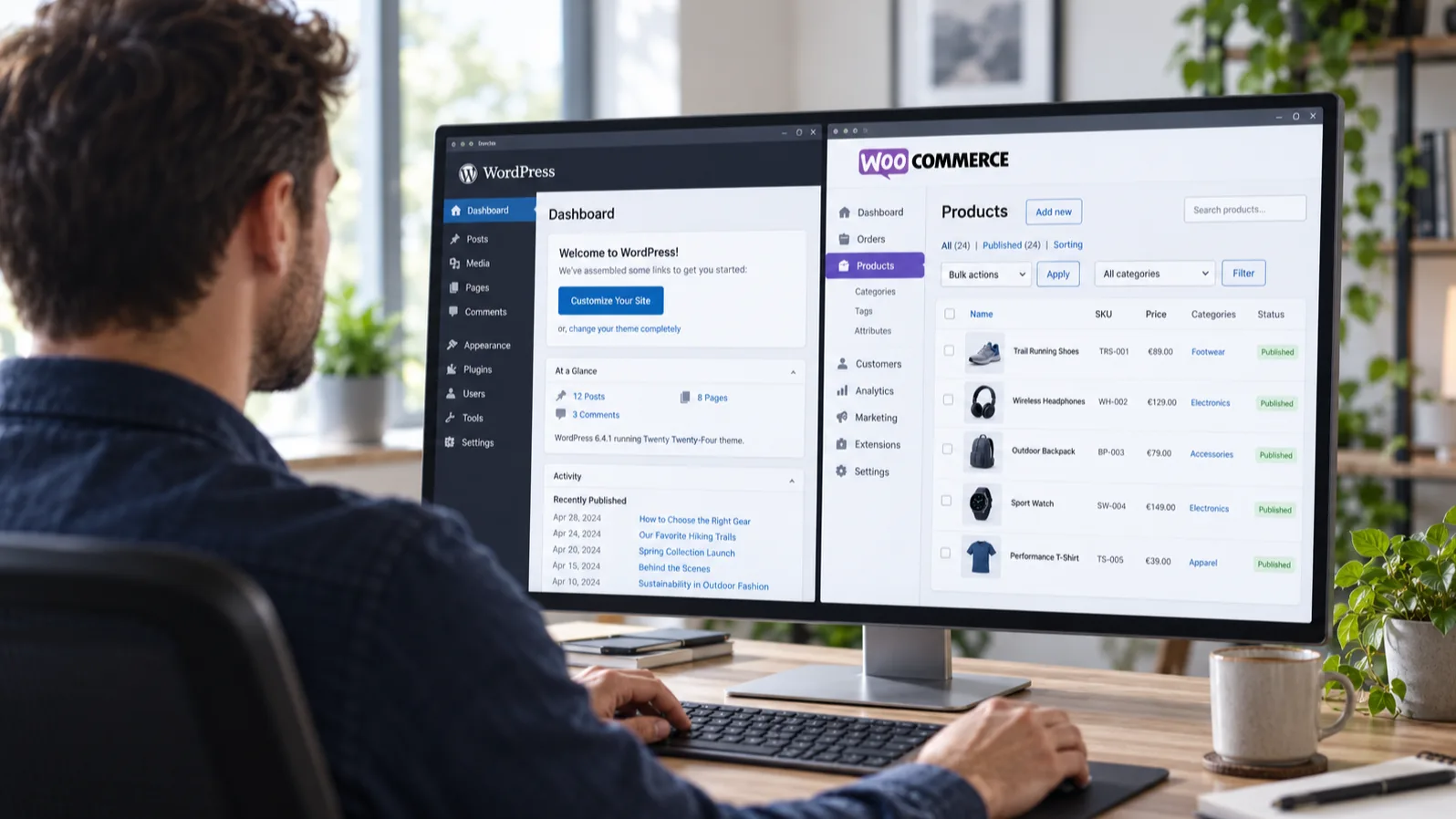
- When migrating platform (from WooCommerce to Shopify, or the other way around), always verify the Klatsa integration again; that step is regularly forgotten.
For publishers:
- Keep an eye on your feed import. If product counts suddenly fall or the last sync fails, that is a sign to act.
- Report it straight away if you notice that clicks you send are not coming back as commission. The sooner we know, the sooner we can step in.
Transparency as the foundation
Affiliate marketing stands or falls on trust: publishers trust that every click that converts will also be paid out, advertisers trust that the data they see is correct. Monitoring is the technical backbone of that trust.
We cannot promise that nothing will ever go wrong; that would be a lie. But we can promise that we will notice as quickly as possible, be open about it, and work with you on a solution.
Questions about the tracking status of your integration? Check the integration health in your dashboard, or get in touch.