Why we moved from TUNE to our own platform
Slow support, an API that did not do what it promised, laborious Shopify and WooCommerce connections, and, not unimportantly, our data in an American data centre. At a certain point the choice was clear: build it ourselves, with our data in Europe.
 By Jeroen Jaspers
·
·
5 min read
By Jeroen Jaspers
·
·
5 min read
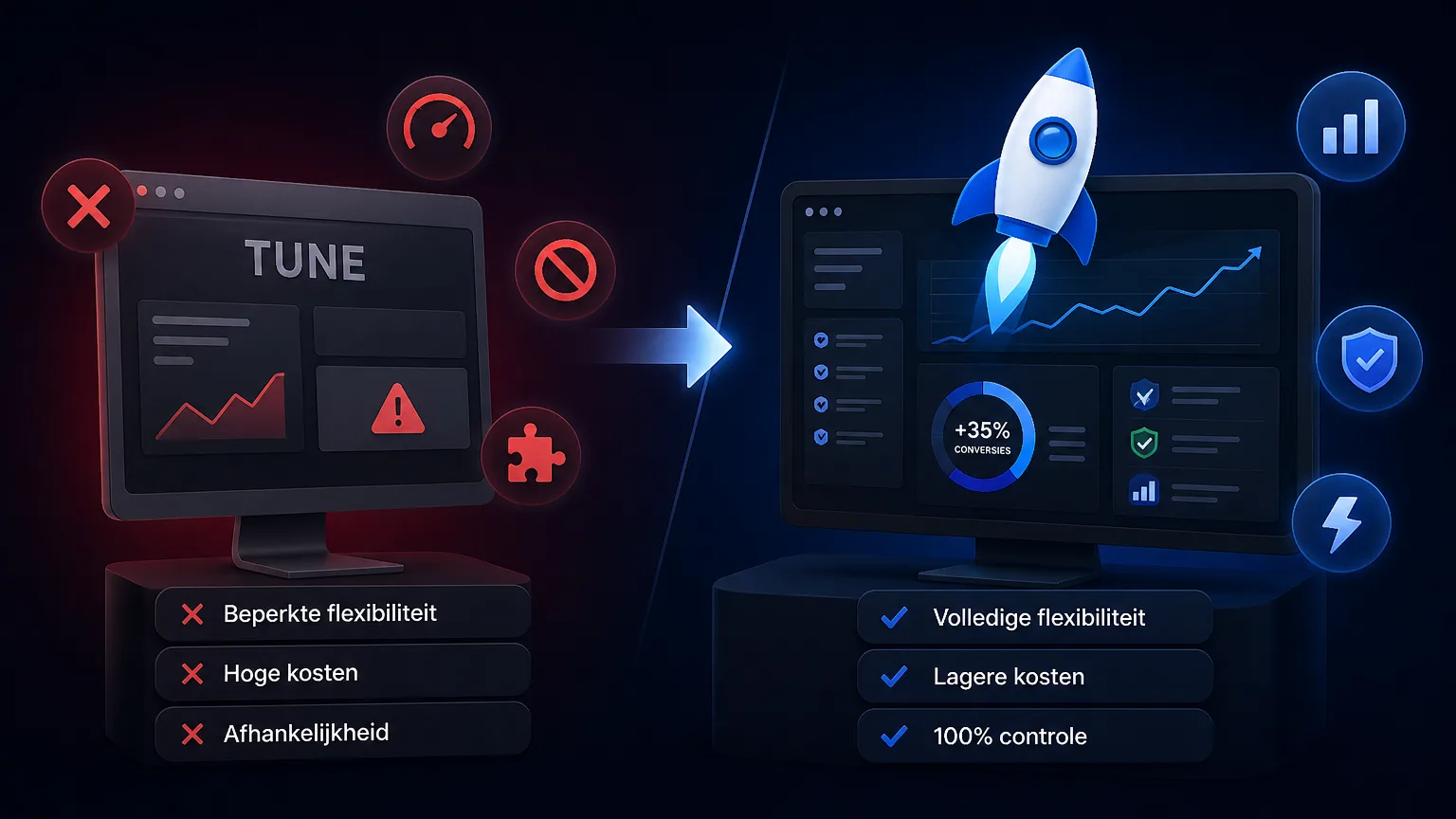
For years Klatsa ran on TUNE, a well-regarded international affiliate platform formerly known as HasOffers. It did its job: clicks were counted, conversions were recorded, commissions were settled. We had no reason to complain.
But as we grew, so did the list of things we could not do. And at a certain point the balance shifts: from "does what it needs to do" to "stops us doing what we want to do". For us that moment came at the end of 2025.
Why we wanted to leave
It was not a falling out, but an accumulation of things that each week became a little more annoying:
- Support had ground to a halt. Tickets stayed open for days, answers were often generic or led to a counter-question. When we needed something before a client meeting, it rarely arrived in time.
- The API was not reliable. Endpoints responded inconsistently, rate limits were unclear, and documentation and behaviour did not line up. For a platform on which you build your reporting, exports and integrations, that was a daily frustration.
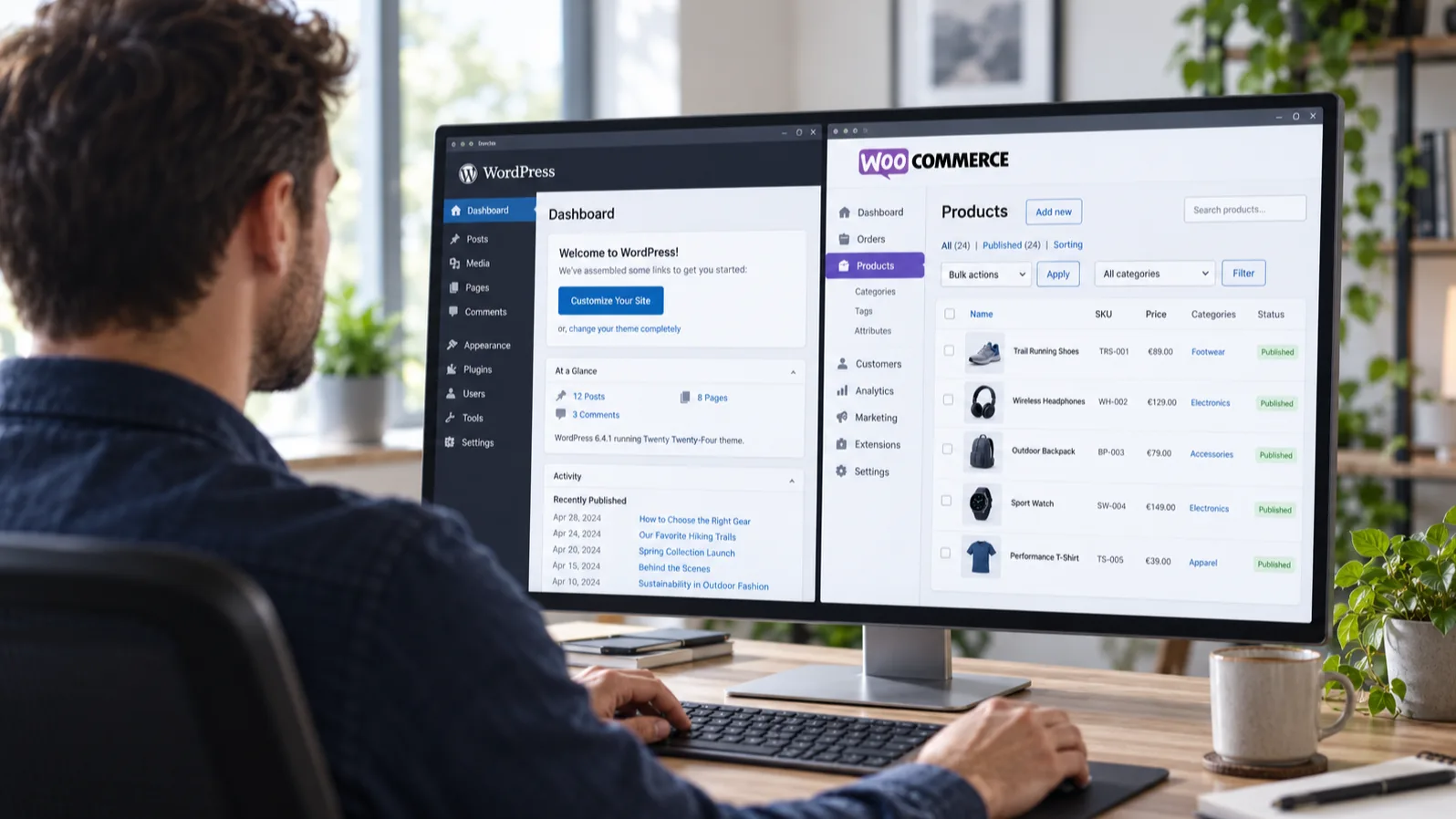
- Webshop integrations were laborious. For Shopify, WordPress and WooCommerce (the three platforms our advertisers are on most often) we had to write custom work for almost every shop. A lot of our own code, fragile with every shop update, and always needing to be tested again.
- Reporting did not work for us. The standard reports were not flexible enough, exports took too many steps, and the insights we wanted to share with advertisers and publishers had to be assembled elsewhere.
- Day-to-day use took too much time. Setting up an offer, changing a commission, approving a publisher: too many steps everywhere, too many clicks, too much "now where was that again".
- An American company, data in an American data centre. At a time when EU supervisory authorities are increasingly strict about data transfers to the US, and advertisers increasingly ask where their data actually sits, that felt uncomfortable. We wanted less dependence on a foreign party we have no influence over.
At the same time: the mechanics behind affiliate tracking are not as complicated as many parties make out. A click, a unique identifier, a conversion notification from the webshop back to the network. We knew we could build that ourselves, better, faster, tailored to our own needs, and with the data simply here.
What we got back for it
Since we have been running on our own platform, a lot has changed. It is mostly the small things that add up:
- Plug and play for your webshop. For Shopify, WordPress and WooCommerce we have our own direct integrations that run within minutes. No custom code per shop, no risk of breaking with every shop update.
- An API that works the way it is described. Unambiguous endpoints, predictable rate limits, and behaviour that matches the documentation. That sounds obvious; for us it was reason enough to redo everything.
- Real-time insight. Conversions appear in the dashboard within seconds, not hours. Publishers see immediately what is happening and can act on it.
- Reporting that bends to what you want to know. Filters, charts, exports, not "what the system offers" but "what the advertiser or publisher needs at that moment".
- Tracking that holds up. Our connection with webshops runs over a direct server-to-server link, not over browser pixels. Adblockers and privacy tools no longer make any difference. (We wrote this piece about it.)
- Full control. Does an advertiser want to receive a conversion notification in a specific format? We arrange it. A reporting field that exists nowhere as standard? No problem.
- A fairer network. We decide for ourselves which types of publisher we allow and on what terms. Which is why: no coupon sites at Klatsa.
- Personal contact instead of a ticket system. Every advertiser and publisher has a fixed point of contact with us, not a form in a vendor portal.
- Your data stays in Europe. Our servers run inside the EU, under the GDPR. No more uncertainty about where data goes, no American vendor with shifting terms.
What it taught us
A few things we discovered along the way:
- The problem is almost never the technology. It usually sits in the translation: from what the advertiser really wants to what the system can handle. Having your own platform means that translation runs smoothly.
- Speed wins. Not how fast you come up with an idea, but how fast you have it working for your advertisers and publishers. When we depended on a vendor roadmap, ideas never made it to execution. Now they do.
- Transparency becomes a differentiator. To most people an affiliate platform is a black box. If you are open about how you count, how you attribute and how you pay out, you stand out.
Was it worth it?
For most affiliate players: do not do it. Off-the-shelf platforms exist for good reasons, affiliate tracking is a discipline of its own, and if what is out there works well enough for you, stay where you are.
For us: yes, without a doubt. Klatsa is now a platform we can add something new to every month because our advertisers or publishers ask for it. Not in six months when the supplier picks it up, but this coming Friday.
Want to know how we would set it up for your shop or publisher account? Send us a message. We are happy to be open about how it works, because that is the way we want to run a network.